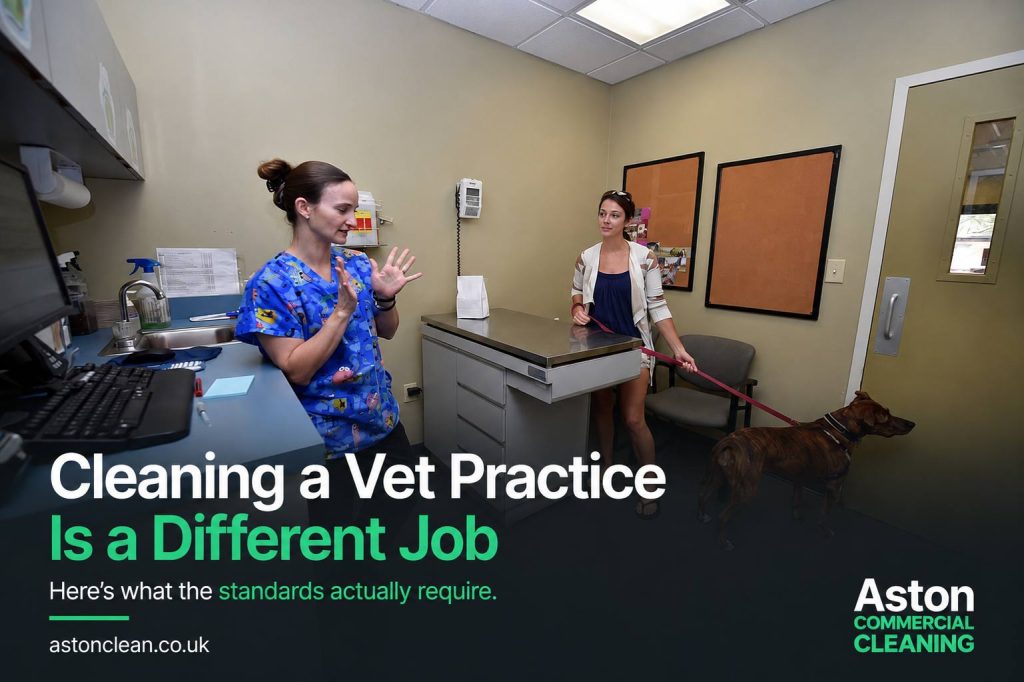
Veterinary practices present some of the most demanding cleaning challenges in any commercial environment. High volumes of animal traffic bring mud, hair, organic matter, and potential pathogens through the building every day. Consulting rooms require clinical hygiene standards between every patient.
Most standard commercial cleaning contracts are not built for this.
What Makes Vet Practice Cleaning Different
The primary challenge is volume and variety. A busy mixed practice dealing with both small and large animals generates a significant amount of mess throughout the day.
Consulting rooms carry additional requirements. In the same way that medical and dental practices require zone-based cleaning with colour coded equipment and COSHH compliant products, veterinary practices need a systematic approach to cleaning between patients to minimise cross contamination.
RCVS Practice Standards and What They Mean for Cleaning
The RCVS Practice Standards Scheme sets out expectations for veterinary premises that include cleanliness and hygiene as part of the assessment criteria. Practices that hold accreditation are expected to demonstrate that their premises are properly maintained and that hygiene protocols are followed.
This has practical implications for the type of cleaning contractor a practice chooses.
Daily vs Periodic Deep Cleaning
For most veterinary practices, a combination of daily cleaning and periodic deep cleans works best. Daily cleaning covers the areas that need constant attention. Periodic deep cleans deal with the accumulated residue that daily cleaning cannot fully address.
A Long Term Relationship in Practice
We have been cleaning Wendover Heights Veterinary Practice in Wendover since 2021, covering daily office cleaning and periodic deep cleans of the consulting rooms. The practice deals with both large and small animal patients, generating high volumes of mud and grime throughout the day. See our Wendover Heights Vets case study for how the contract works.